Frances Ross is elected to the National Academy of Engineering
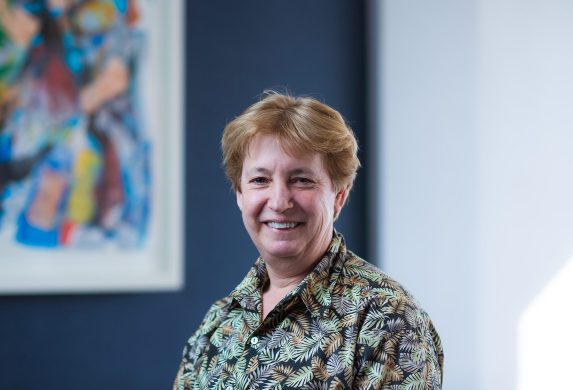
Frances Ross, the TDK Professor in Materials Science and Engineering, has been elected to the National Academy of Engineering’s Class of 2026. Ross is renowned as a pioneer in in situ transmission electron microscopy (TEM). The approach uses powerful microscopes to study nanoscale materials as they grow and react to different environments in real time.
NAE membership honors engineers from business, academia, and government who have made “outstanding contributions to engineering research, practice, or education” and advanced emerging areas of technology, according to a statement released Tuesday.
“Professor Ross’s development of ultra-high-vacuum and liquid cell TEM approaches has transformed how we understand electronic materials, surface reactions, and beyond,” said Department Head Polina Anikeeva. “She is also an exceptional mentor, deeply committed to the careers of her trainees.”
Ross is recognized for “ultra-high vacuum and liquid-cell transmission electron microscopies and their worldwide adoptions for materials research and semiconductor technology development,” the NAE statement said. She specializes in observing how nanoscale materials grow and react in gases and liquids, capturing high-resolution “movies” with electron microscopy. These insights are critical for understanding the electrochemical reactions in materials used to make catalysts, batteries, and fuel cells.
One of 158 new members elected this year, Ross is among seven MIT faculty honored, six of them in the School of Engineering. She earned her doctorate at Cambridge University in the United Kingdom in 1989, followed by postdoctoral studies at Bell Labs in New Jersey and a staff scientist position at the National Center for Electron Microscopy at the Lawrence Berkeley National Laboratory, where she conducted high-resolution studies of materials at the nanoscale.
Ross later worked at the IBM Thomas J. Watson Research Center in New York, studying how crystals grow in liquid and gas environments. She joined MIT’s Department of Materials Science and Engineering (DMSE) in 2018. At MIT, Ross oversaw the acquisition of state-of-the-art electron microscopy equipment just as the new MIT.nano facility was coming online, building a research group focused on using dynamic, in situ microscopy to understand how materials form and evolve.
Among the machines she helped bring to MIT are an ultra-high-vacuum TEM, enabling her signature approach of filming materials as they form, and a scanning tunneling microscope with an integrated ion beam for measuring and modifying samples. Her research group uses these tools to design and study new materials, from 2-D crystals to nanoscale metal structures.
Ross has received multiple honors, including the Hatsujiro Hashimoto Medal from the International Federation of Societies for Microscopy and the Burton Medal from the Microscopy Society of America. She is also a fellow of several professional societies, includingtheRoyal Microscopy Society,American Physical Society, Materials Research Society, and American Association for the Advancement of Science.
DMSE’s faculty includes numerous NAE members, including Professor Yoel Fink, inducted in 2025, and Professors Angela Belcher, Yet-Ming Chiang, and Michael Cima.