DMSE Career Fair expands students’ career horizons
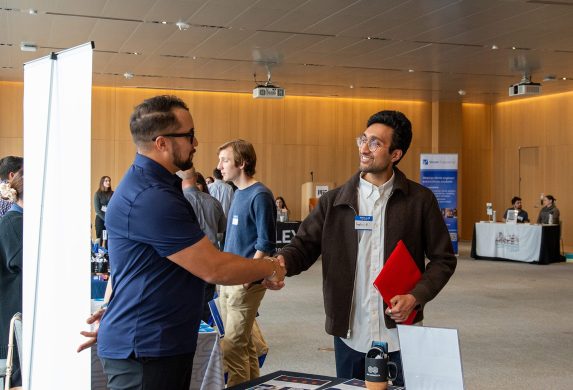
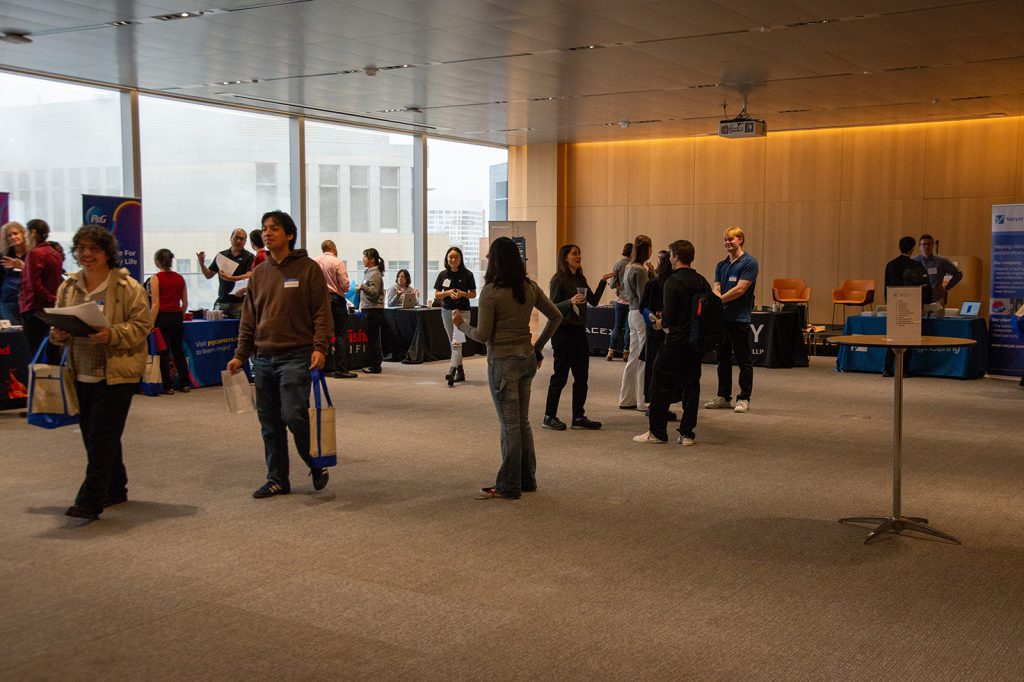
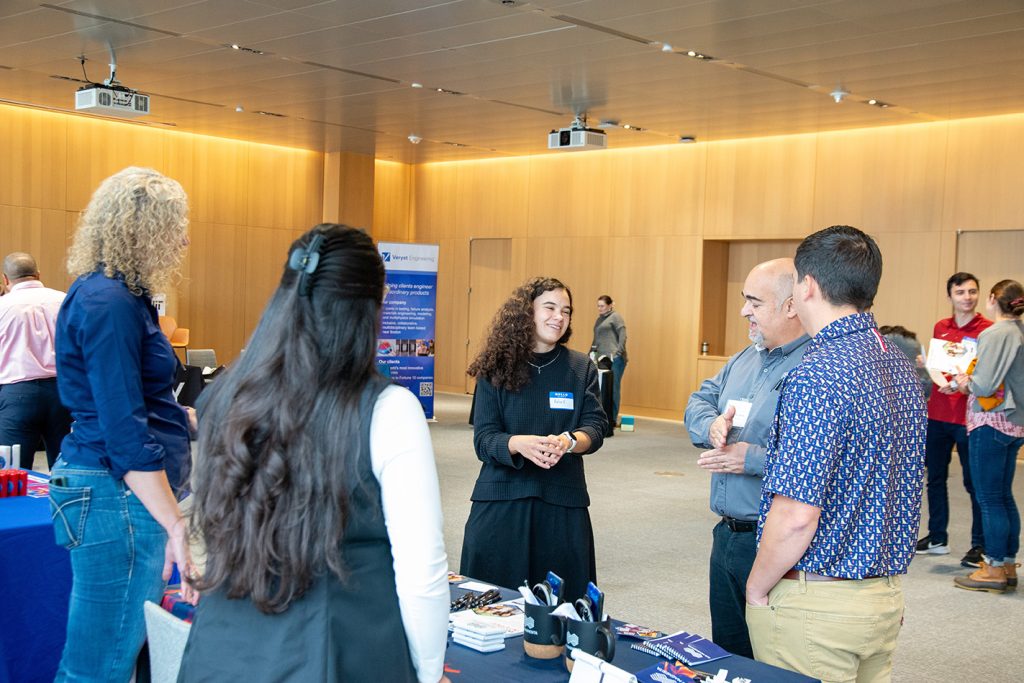
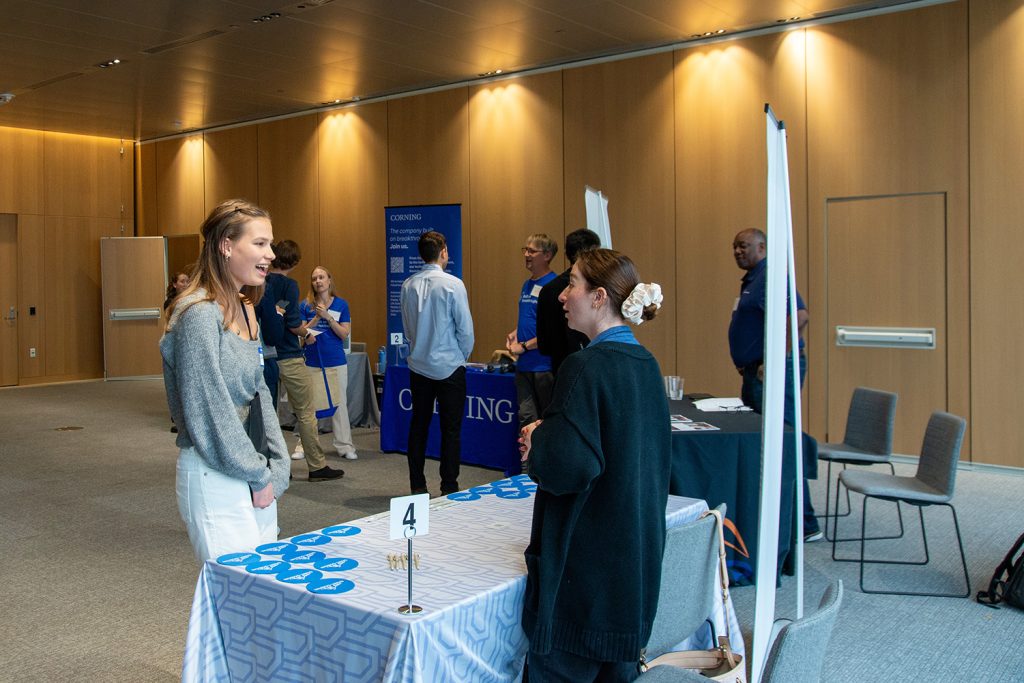
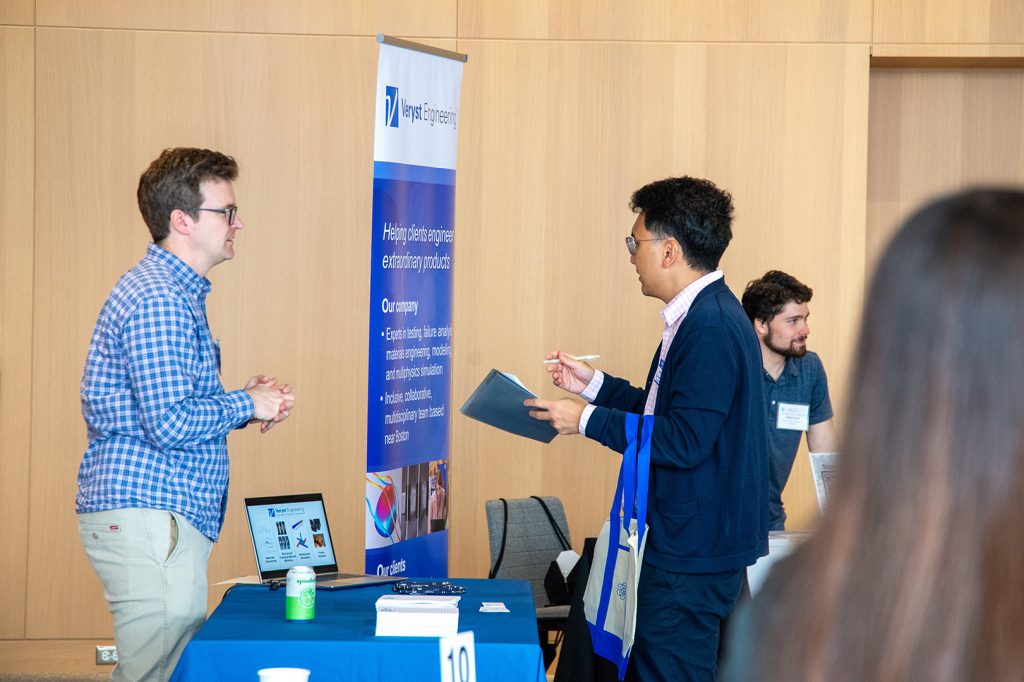
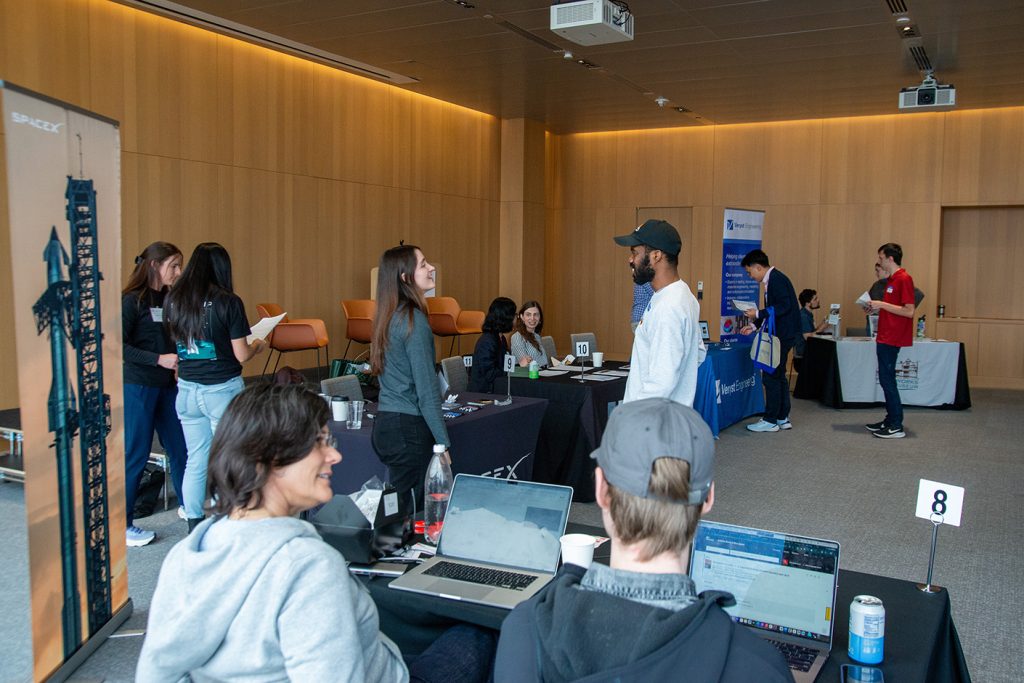
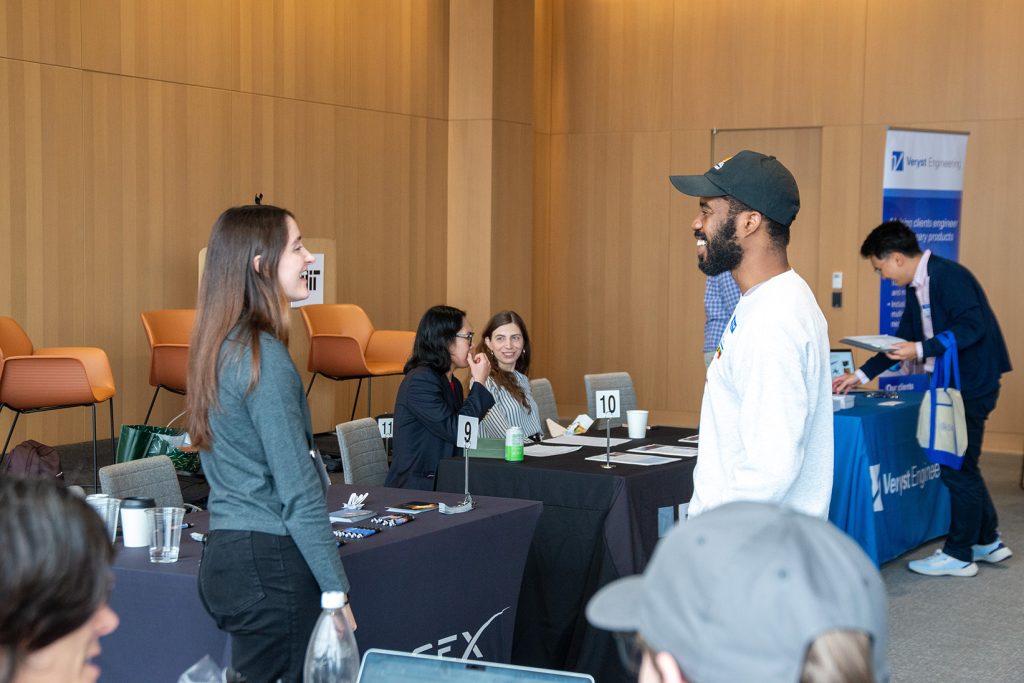
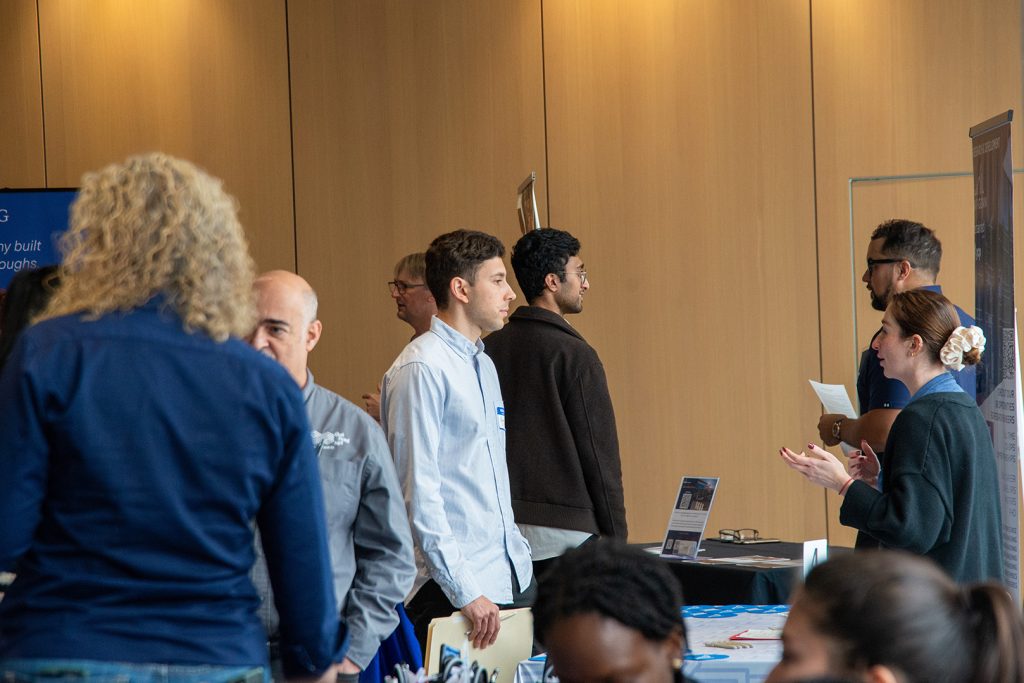
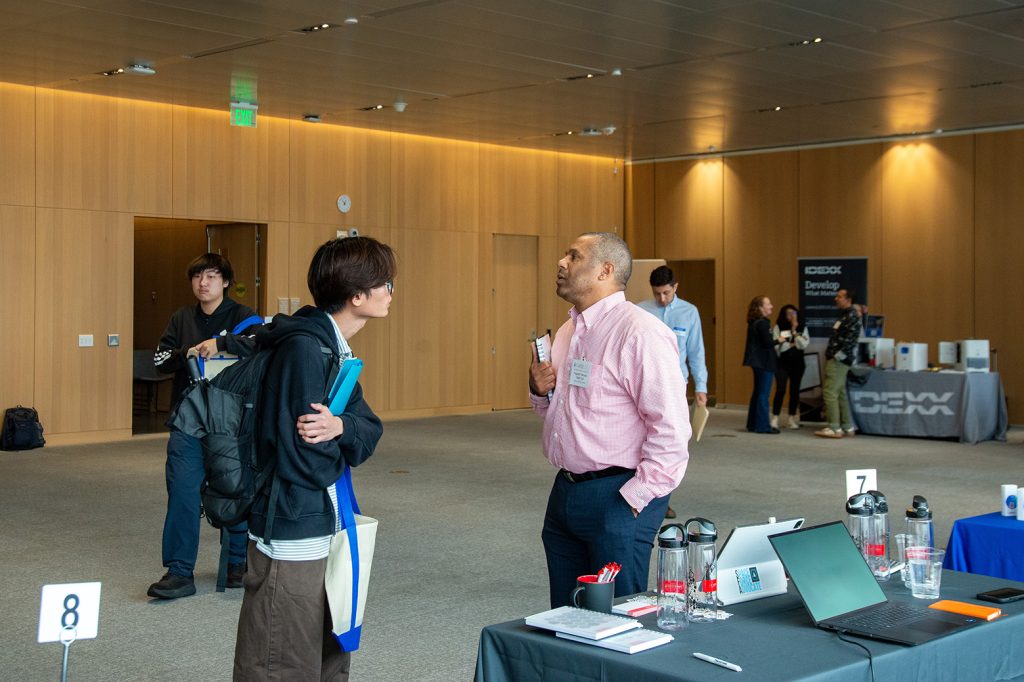
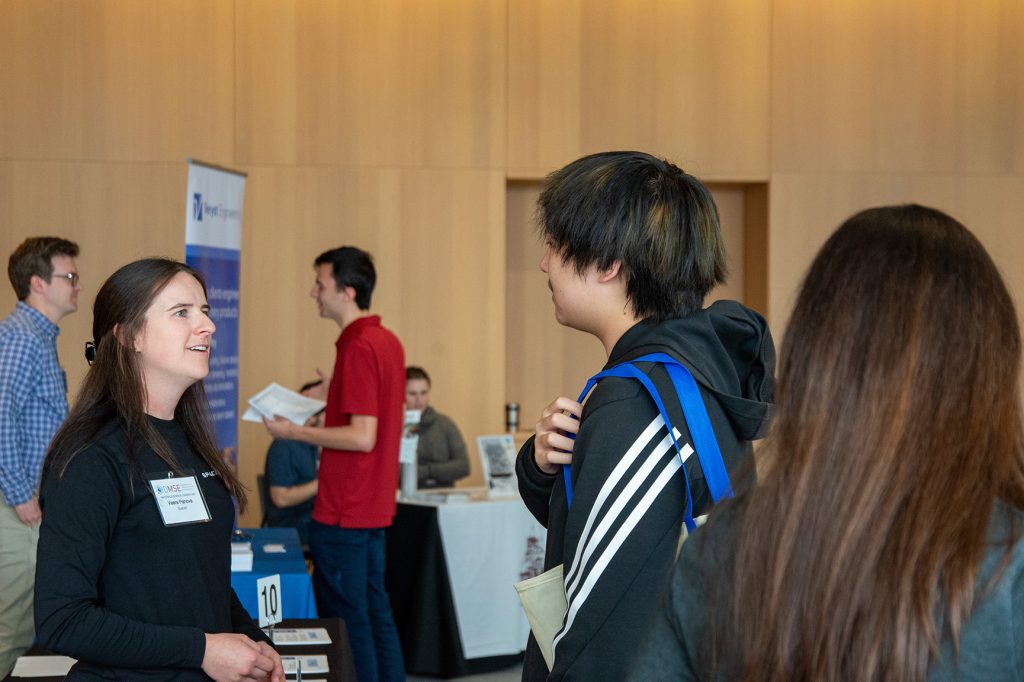
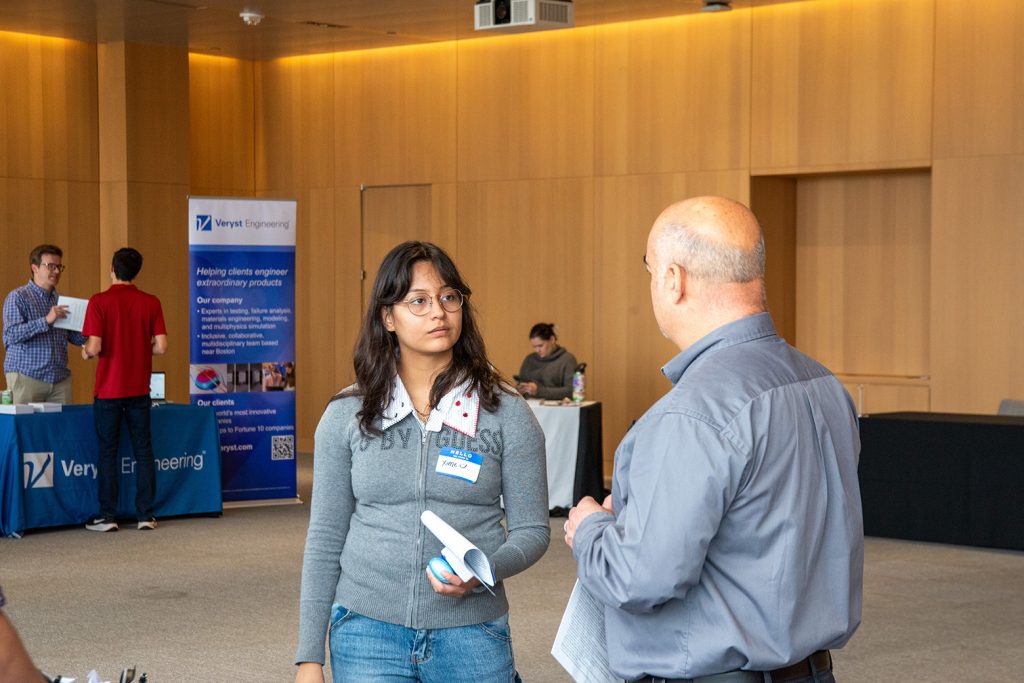
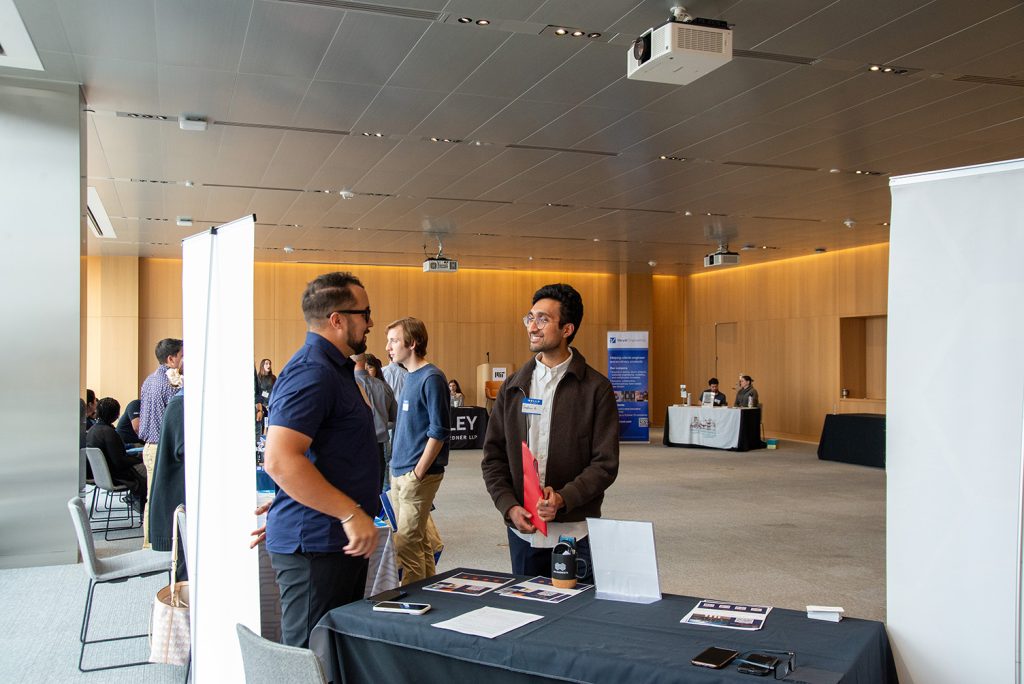
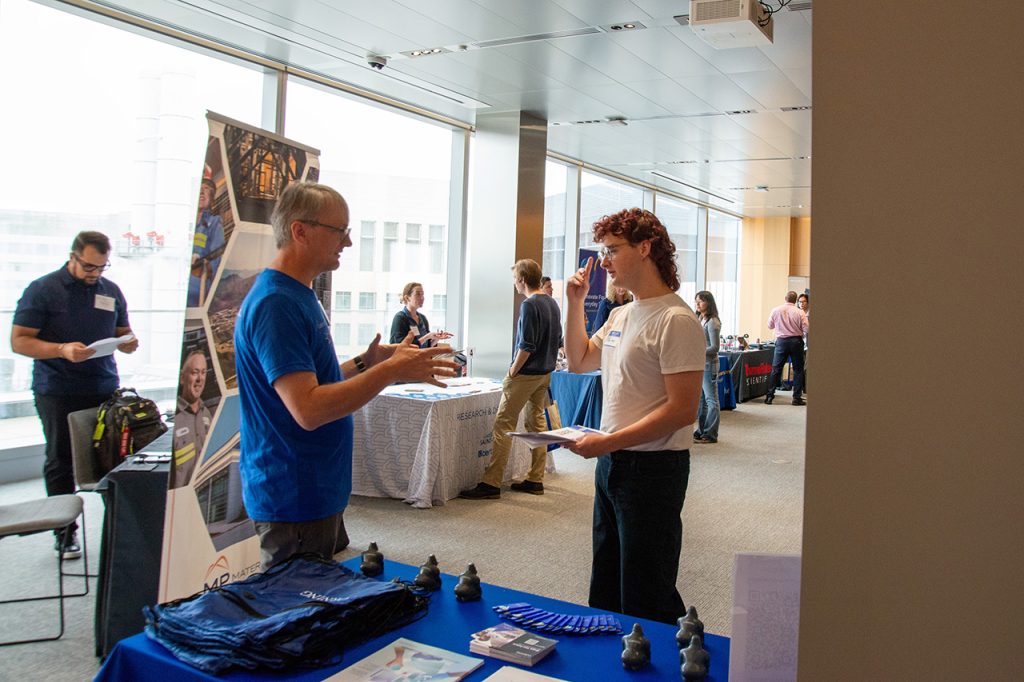
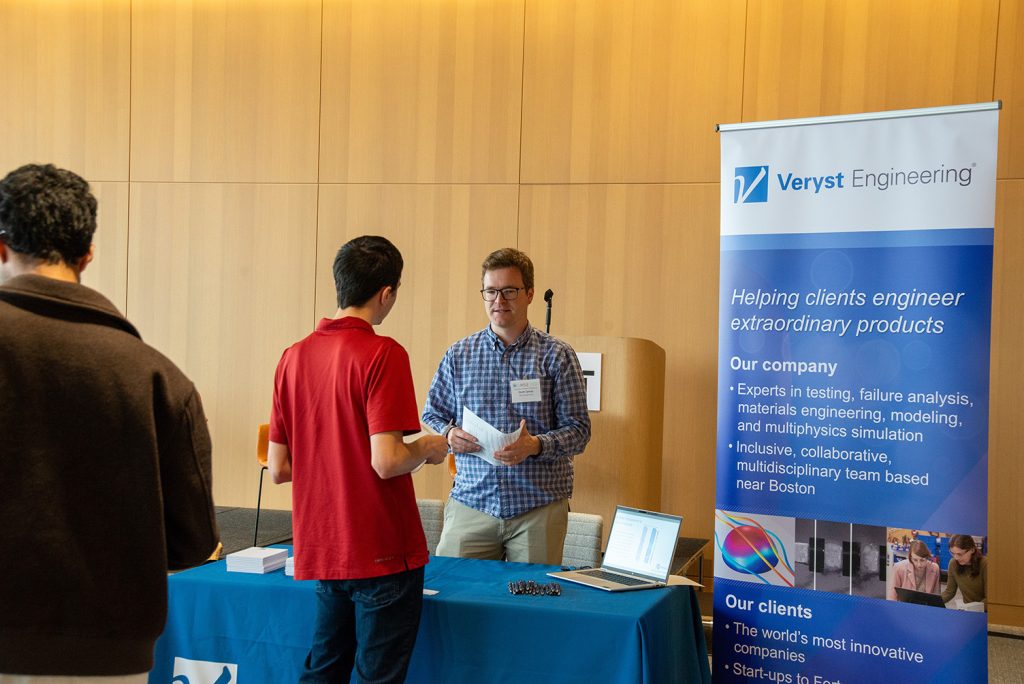
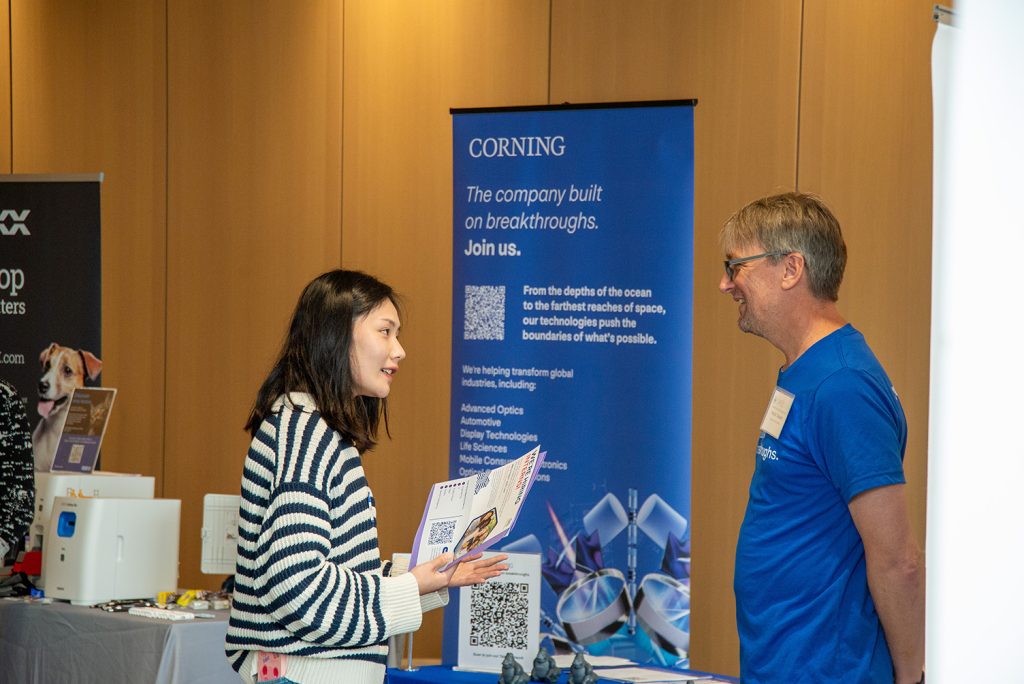
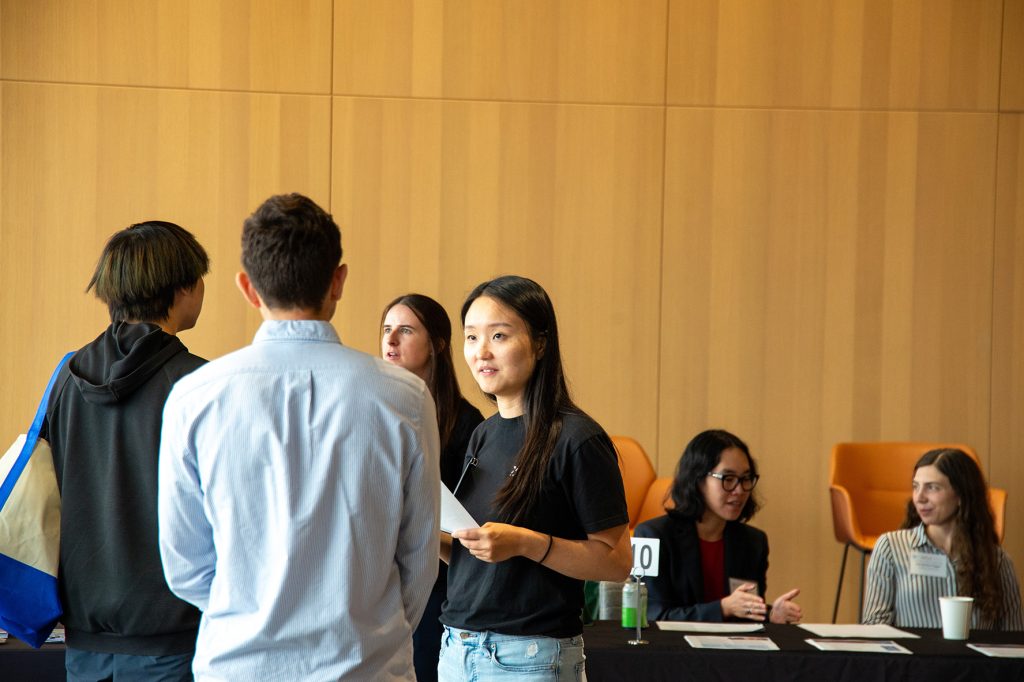
The eighth floor of MIT’s Schwarzman College of Computing brought together recruiters, students, and postdocs from the Department of Materials Science and Engineering (DMSE) on October 16 for the fourth annual DMSE Career Fair.
Recruiters from 12 companies represented industries ranging from advanced materials and manufacturing to aerospace, life sciences, and consumer products. Most had open positions or internships to fill, said Gabe Kies, senior academic program assistant at DMSE and the event’s main organizer.
“The thing I consistently hear from recruiters is that they really are trying to hire and that it’s just really, really hard to find good candidates,” Kies said. “So they’re eager to be at the big MIT Career Fair and our smaller departmental events because if they’re recruiting MIT students, there’s already some quality control in place there.”
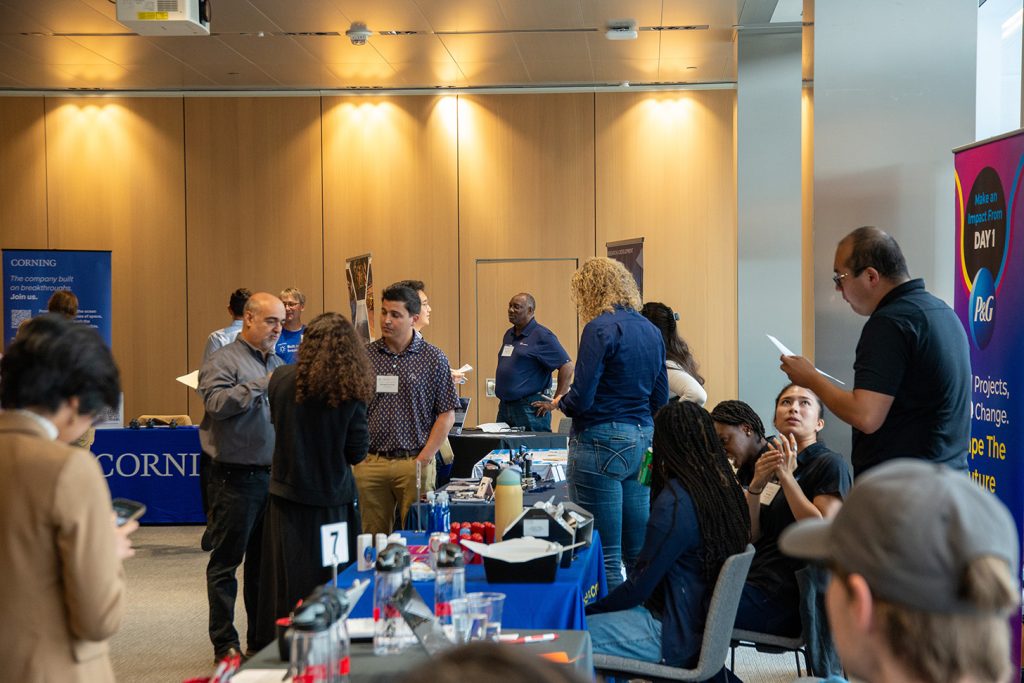
Returning employers included Corning, Procter & Gamble, and SpaceX. Newcomers included RHI Magnesita, an Austrian manufacturer of heat-resistant products and systems, and and Neural Concept, a company based in Switzerland that builds AI-powered engineering tools.
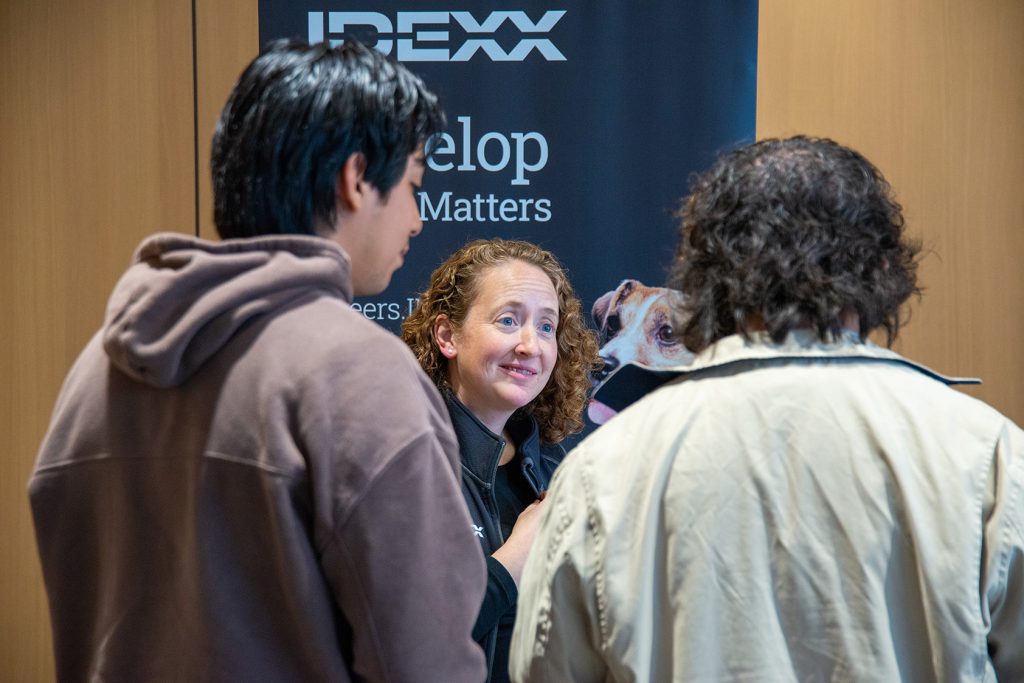
Jennifer Gagner, senior director of discovery and technology futures at veterinary diagnostics company IDEXX and a DMSE alumna, said materials science and engineering students bring a versatile skill set that can serve them in a wide range of industries.
“Materials sets you up so well for so many different things that you can do,” Gagner said. A materials science education provides a strong technical foundation, she explained, along with the ability to approach and solve technical problems—skills that employers across industries value.
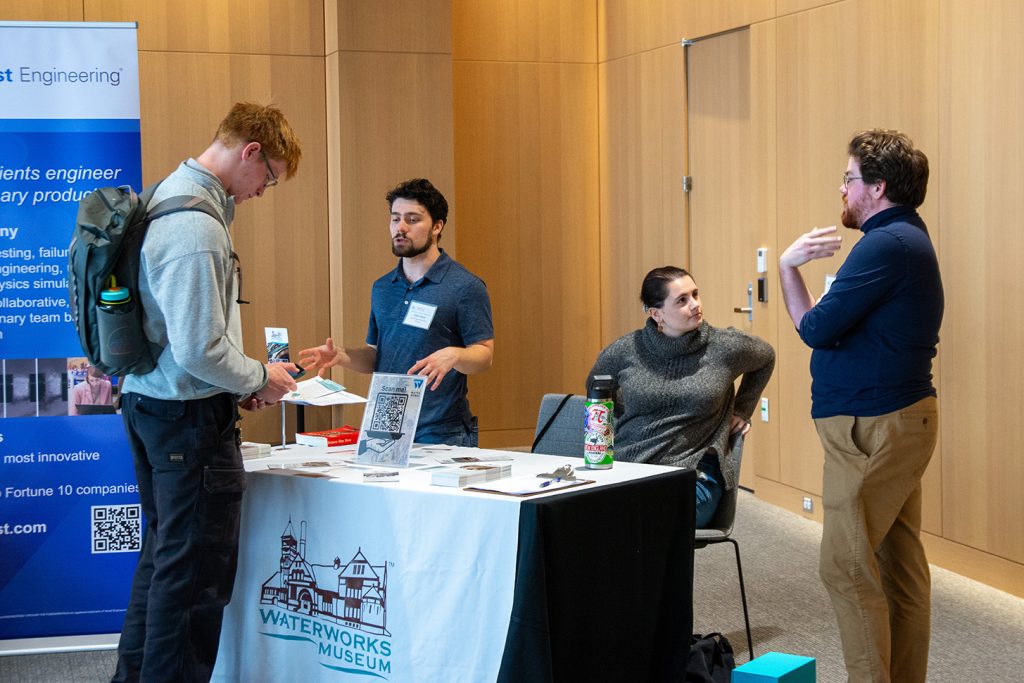
The fair also included organizations whose work might not immediately suggest a need for materials engineers, such as law firm Foley & Lardner LLP and the Metropolitan Waterworks Museum in Boston.
“I think there are a lot of career pathways out there that are not directly engineering-related that would hire people with an engineering degree,” Kies said. One of his goals for the fair, he added, is to encourage students to keep an open mind and explore opportunities that might not seem like an obvious fit at first.
The event was open to undergraduates, graduate students, and postdocs. Berkan Tarak, a senior double-majoring in materials science and engineering and physics, said he appreciated the focused nature of the DMSE fair compared with larger events such as MIT’s institute-wide Career Fair, which features more than 200 booths.
“In a general career fair, software companies are dominating the booths,” said Tarak, who is interested in manufacturing and research and development. Even when manufacturing companies participate in larger fairs, he said, they are often looking primarily for software engineers.
“I think these small events make it simpler for us and for companies to find each other,” Tarak said.
A companion event was a SpaceX panel with two alumni who discussed their career paths, their work, and their experiences in industry. The panel drew more students than organizers anticipated, Kies said, underscoring students’ interest in connecting with professionals and learning about career options firsthand.
“Students at all levels, undergraduates up through postdocs, are really interested in having those connections with recruiters, with current employees,” he said. He hopes to build on that interest with more opportunities for students to hear from alumni working in different industries.