Tuning Light With Materials and Materials With Light
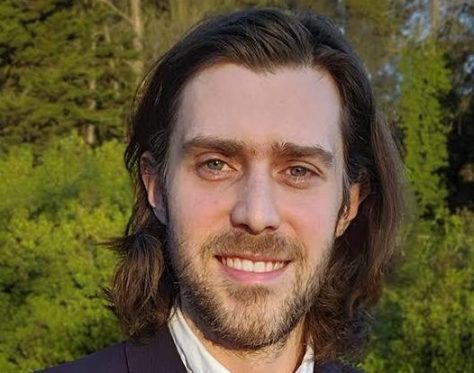
Speaker
Felipe H. da Jornada
Assistant Professor, Department of Materials Science and Engineering, Stanford University
About This Talk
Optical responses have long served as powerful, noninvasive fingerprints for characterizing materials, with recent efforts in monolayer systems displaying strong quantum effects, and many-body interactions serving as contemporary examples. In this talk, Stanford University’s Felipe H. da Jornada explores how to understand and actively modify excited-state properties in materials, enabled by advances in parameter-free calculations based on many-body perturbation theory.
Jornada will discuss the interplay between excitons and atomic structure in twisted bilayer materials with moiré patterns, as revealed by first-principles calculations and time-resolved, angle-resolved photoemission spectroscopy experiments. He shows that proximity effects, such as those arising from a ferroelectric twisted hBN, give rise to novel excitonic states, illustrating how spatial confinement, many-body interactions, and valley physics can be engineered synergistically in 2D systems. He will also present an approach based on machine-learned interatomic potentials that can accurately predict the geometry of twisted materials in a computationally efficient manner while incorporating a strong validation protocol. Finally, Jornada introduces an approach to obtain nuclear forces and higher-order derivatives in complex photoexcited materials.
About the Speaker
Felipe H. da Jornada is an assistant professor in the Department of Materials Science and Engineering at Stanford University. His research group focuses on understanding the electronic and optical properties of atomically thin materials – such as graphene and mono- and few-layer transition metal dichalcogenides – using first-principles computational approaches that employ a combination of new theoretical formalisms and massively parallel computer calculations. He obtained his Ph.D. in physics from UC Berkeley, having received the best thesis award from the Kavli Energy NanoScience Institute at UC Berkeley (2017), the NSF CAREER award (2023), the ONR Young Investigator Award (2024), and the IUPAP Early Career Award in Computational Physics (2025).
About the MSE Seminar Series
The Materials Science and Engineering (MSE) Seminar Series features distinguished speakers from leading institutions, offering a platform for sharing groundbreaking research, innovative ideas, and entrepreneurial experiences. Held multiple times each semester, these seminars bring global perspectives world to MIT’s materials research community, exposing students, faculty, and postdocs to cutting-edge concepts and valuable networking opportunities.