New Frontiers in Electrical, Thermal, and Thermoelectric Transport Predictions
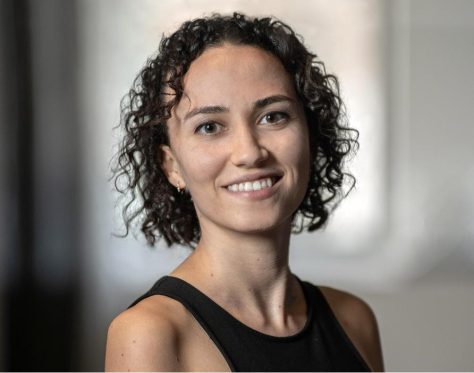
Speaker
Jennifer Coulter
Flatiron Research Fellow, Flatiron Institute’s Center for Computational Quantum Physics
About This Talk
Understanding the transport properties of materials is critical to device design and the interpretation of experimental phenomena. Modern semi-classical Boltzmann transport (BTE) methods provide impressively accurate predictions of charge and heat transport in traditional materials. However, predictions for quantum materials, which exhibit unique and technologically desirable phenomena including exceptional conductivity and high-temperature superconductivity, is typically out of reach; theoretical and computational challenges render accurate predictions prohibitively difficult.
In this talk, Coulter will demonstrate how a combination of high-performance computing and new theory unlocks transport in complex and unexplored cases. These include hydrodynamic materials, where heat and charge transport occur essentially perfectly except at the boundaries of a device, ultra-high conductivity transition metal oxides, and topological flat-band materials for thermoelectric applications, in which beyond-BTE effects dominate transport. Coulter will close with a new formalism to predict electron-phonon interactions in correlated electron systems, enabling predictions of correlation-enhanced phonon-mediated resistivity. These works demonstrate the power of computation to revolutionize transport theory, opening new frontiers in quantum materials.
About the Speaker
Dr. Jennifer Coulter is broadly interested in combining computational materials theory and high-performance computing to investigate useful or unexplained heat and charge transport phenomena. She is currently a Flatiron Research Fellow at the Flatiron Institute’s Center for Computational Quantum Physics (CCQ). She obtained her BS in physics from Rutgers University in 2017 and her PhD in applied physics from Harvard University in 2023, during which she was a Department of Energy Computational Science Graduate Fellow (CSGF) from 2017-2021.