Ionic Compatibilization of Plastics to Reduce Environmental Impacts
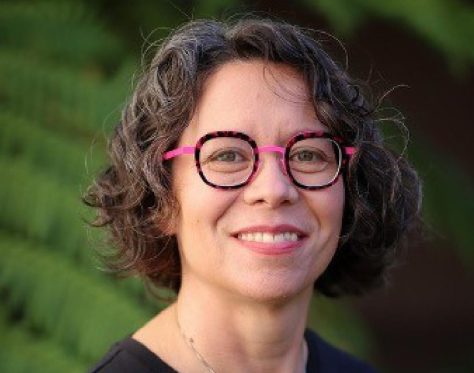
Speaker
Rachel A. Segalman
Vice Chancellor for Research and Edward Noble Kramer Distinguished Professor of Chemical Engineering, Chemistry & Biochemistry, and Materials University of California, Santa Barbara
About This Talk
People simultaneously associate plastics with both waste in the form of massive landfill requirements and a tendency to escape into sensitive ecosystems—and as a potential solution to energy and climate crises in the form of cheap, lightweight, safe batteries and other energy devices. In both cases, one attribute of polymers is simultaneously its greatest flaw and a tremendous opportunity in terms of improved performance: processibility. The inability to recycle plastics is at least partly rooted in the array of chemically dissimilar commodity plastics on the market and our inability to recycle such a mixed stream.
In this talk, Rachel Segalman of the University of California, Santa Barbara, will demonstrate the tremendous utility of electrostatic interactions in reducing the potential environmental impacts of plastics. For example, her group has recently demonstrated that incorporating even a single charged group per polymer chain causes highly immiscible polymers to form homogeneous blends with high mechanical strength. Similar electrostatic attractions are so strong as to force conjugated (conducting) polymers to form high solids loading solutions that have shown great utility as battery binders.
About the Speaker
Rachel Segalman is the Edward Noble Kramer Distinguished Professor of Chemical Engineering and Materials at UC Santa Barbara. She also holds a faculty appointment in the Department of Chemistry and Biochemistry. Her research involves controlling the hierarchical structure and thermodynamics of energy-relevant polymers including water separation membranes, polyelectrolytes, and semiconducting and bioinspired polymers. This includes a desire to understand the molecular-scale design rules and synthesis that lead to self-assembly and mesoscale architectures that then control macroscopic properties such as ionic, thermal and electronic conductivity as well as surface activity. Applications of relevance include microelectronics, electrolyzers and batteries, separation membranes, and marine anti-fouling coatings.
Segalman earned a bachelor’s degree with highest honors in chemical engineering from the University of Texas (1998) and a Ph.D. in chemical engineering from UC Santa Barbara (2002). She was department chair of Chemical Engineering at UCSB from 2015 until 2023. She is the associate eirector of the UT/UCSB/LBL EFRC: Center for Materials for Water and Energy Systems and the co-editor of the Annual Reviews of Chemical and Biomolecular Engineering.
Segalman is a member of the DOE Basic Energy Sciences Advisory Committee (BESAC), the Science and Technology Committee for the Lawrence Livermore National Security, chair of the Division of Polymer Physics of the American Physical Society, and a co-author of the recent National Academies study, “Chemical Engineering: Challenges and Opportunities in the 21st Century. She also serves on the National Academies Committee on International Security and Arms Control (CISAC).
Among other honors, she has received the E.O. Lawrence Prize from the U.S. Department of Energy, the Andy Acrivos Award for Professional Progress from the American Institute of Chemical Engineers, the Journal of Polymer Science Innovation Award, and the Dillon Medal from the American Physical Society. She is a fellow of the American Physical Society, the Royal Society of Chemistry, the American Institute of Chemical Engineers, and has been elected to the American Association for the Advancement of Science, American Academy of Arts and Sciences and the National Academy of Engineering.