Harnessing Light, Color, Ions, and Electrons: From Electrochromics to Artificial Retina
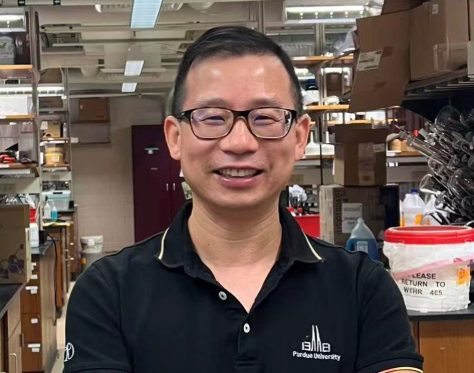
Speaker
Jianguo Mei
- Qiushi Chair Professor, Department of Polymer Science and Engineering, Zhejiang University
- Director, Center for Living Electronics and Adaptive Neurotherapeutics, Institute of Fundamental and Transdisciplinary Research, The Second Affiliated Hospital of Zhejiang University School of Medicine
About This Talk
Zhejiang University’s Jianguo Mei bridges fundamental discovery and real-world innovation by integrating chemistry, materials science, engineering and medicine. His research group develops organic semiconductors and conductors with transformative potential for printed electronics, bioelectronics, and living electronics, pursuing both technological impact and fundamental scientific frontiers.
In this seminar, Mei will highlight two complementary research directions: Electrochromic Technologies and Living Electronics. Both are rooted in the precise control of light, color, ions, and electrons, yet extend these principles toward very different applications. Through Ambilight Inc., his research group’s discoveries in flexible electrochromic thin films have been translated into roll-to-roll manufacturing and commercialized for applications ranging from electric vehicles to consumer electronics. These examples illustrate how fundamental discoveries made in an academic laboratory can evolve into market-ready technologies.
The second direction, Living Electronics, asks a more fundamental question: Can electronics become part of living systems rather than being implanted into them? Inspired by biological vision, his group’s work on Organic Eyes seeks to emulate the sensing and processing functions of the human visual system. In parallel, the group is exploring electronics that can grow within the brain, creating electronic materials that form and function directly within living neural tissue. While these goals remain at the frontier of science, they point toward a fundamentally different relationship between synthetic materials and biology.
To illustrate the broader philosophy behind his research, Mei will discuss the journey of n-doped poly(benzodifurandione) (n-PBDF)—from an unexpected polymer discovery and scalable synthesis to applications in flexible electronics and bioelectronics. This case study captures his group’s approach: coupling curiosity-driven discovery with mission-driven innovation. By connecting fundamental chemistry to real-world needs while pursuing ambitious scientific frontiers, Mei and his group seek to turn new molecular concepts into technologies that can ultimately benefit society.
About the Speaker
Jianguo Mei is a Qiushi Chair Professor at Zhejiang University, where he is establishing research programs in organic synthesis, polymer chemistry, printed electronics, and living electronics. He also leads the Center for Living Electronics and Adaptive Neurotherapeutics. Mei previously spent 12 years at Purdue University, where he served as Richard and Judith Wien Professor of Chemistry and department head. He has authored more than 150 peer-reviewed publications, holds 39 granted U.S. patents, and has received more than 22,000 citations. He is also a co-founder of Ambilight Inc., which pioneered the roll-to-roll manufacturing of flexible electrochromic films for smart windows and other applications.
About the MSE Seminar Series
The Materials Science and Engineering (MSE) Seminar Series features distinguished speakers from leading institutions, offering a platform for sharing groundbreaking research, innovative ideas, and entrepreneurial experiences. Held multiple times each semester, these seminars bring global perspectives world to MIT’s materials research community, exposing students, faculty, and postdocs to cutting-edge concepts and valuable networking opportunities.