From Basic Materials Concepts to Technologically Relevant Applications
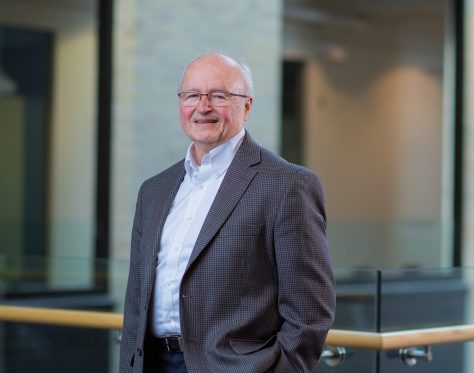
Speaker
Harry L. Tuller
Professor of Materials Science and Engineering, Department of Materials Science and Engineering, MIT
About This Talk
Many of us are drawn to the study of science to satisfy our sense of curiosity and wonder and to gain a deeper understanding of the operation of the world around us. Materials science sits at the intersection of physics, chemistry, biology and engineering and thus attracts many of us from diverse fields. Professor Harry L. Tuller began his studies in electrical engineering but was drawn to the materials field by its interdisciplinary nature and the diverse properties and phenomena one could discover there. By serendipity, he was introduced to a professor doing research in ceramics, a field that, at the time, he associated largely with coffee cups and dinnerware. But after being exposed to the world of defects in metal oxides, their ability to support both ionic and electronic transport, and other unique properties, it became clear how they could enable the development of myriad types of sensors and actuators, clean energy conversion and storage systems, microelectromechanical systems (MEMS) and microelectronic devices.
In this lecture, Tuller will share how his interests in understanding scientific basics led to unexpected technical advances and, inversely, how those advances led to deeper insights into the science of ceramic materials, supported and stimulated by his research group and colleagues, as well as MIT’s culture of innovation.
Some themes:
- Putting defects to work: Novel means of mechanical actuation, electrical switching, and more.
- Grain boundaries everywhere: Blue-sky research on how light can be used to modulate ion transport—implications for novel low-cost detectors and improved batteries and fuel cells.
- Converting lemons to lemon juice: Hitting on a way to micromachine highly refractory materials into MEMS devices and launching Boston MicroSystems.
- Managing gas-solid interactions: Metal oxides breathe oxygen in and out in myriad applications (e.g., auto exhaust sensors, fuel cells, solar-assisted water splitting). Describe recent breakthroughs in controlling oxygen exchange rates and reversing catalytic poisoning.
A reception will follow the talk in the Chipman Room (6-104).
About the Speaker
Professor Harry L. Tuller is a world-renowned expert in electroceramics, a class of ceramic materials used in technologies ranging from energy conversion and environmental sensing to electronics and communications. Another focus of his research is solid-state ionics, which examines the movement of ions, or charged atoms, in solids such as ceramics. His research group models, processes, and optimizes energy-related devices, including sensors, batteries, and fuel cells, as well as microelectromechanical systems (MEMS).
Tuller received bachelor’s and master’s degrees in electrical engineering and a doctorate in solid-state science and engineering, all from Columbia University. Before joining the DMSE faculty, he was a postdoctoral research associate at Technion in Israel. He has published more than 550 articles, co-edited 15 books, and been awarded 33 patents. He is founding editor of the Journal of Electroceramics and series editor of Electronic Materials: Science and Technology. He is also co-founder of Boston MicroSystems, a pioneer in silicon carbide-based MEMS technology and devices.
About the Wulff Lecture
The Wulff Lecture is an engaging and accessible presentation designed for a broad audience. Its purpose is to inform, inspire, and motivate MIT undergraduates to explore the study of materials science and engineering. The event extends an invitation to all MIT, with a special emphasis on welcoming first-year students. More about the Wulff Lecture