A Method for Symmetric Inorganic Generation and Another for Sampling
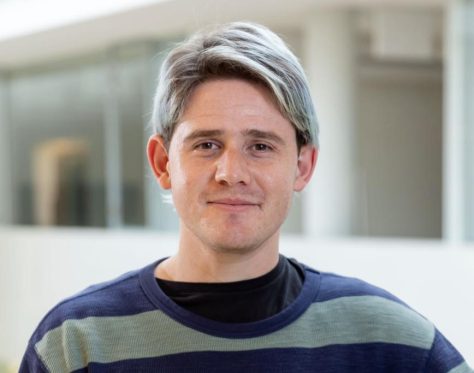
Speaker
Benjamin Miller
Research Scientist, FAIR Chemistry, Meta
About This Talk
This talk will discuss two works: (1) Many generative models for inorganic crystals are not constrained to satisfy a particular crystallographic symmetry, leading to the generation of many trivially symmetric structures. Previous works manage to produce symmetric crystals in appropriate proportion to empirical distributions by crude projection or restricting the vocabulary of bespoke token-based models. Miller presents a model equivariant to a target space group by means of the group average. It places atoms in specific Wyckoff positions and keeps them there throughout generation. The model successfully produces non-trivially symmetric, stable, unique, and novel crystals, even on larger datasets such as the Alexandria and Materials Project combined. (2) Generative models that learn without training data, known as diffusion samplers or Boltzmann generators, currently have practical limitations. Among them, mode collapse and long time-to-samples relative to classical methods. Miller introduces an accumulated repulsive potential into Adjoint Schrödinger Bridge Sampler that significantly enhances exploration over given collective variables and enables the previously unavailable estimation of free energy differences. Diffusion samplers synergize well with enhanced sampling and actually explore faster, in wall-clock time, than metadynamics on reactive chemistry. They also show strong performance on common peptide benchmarks.
About the Speaker
Benjamin Miller studied physics, molecular science, and machine learning at the University of Colorado Boulder and Freie Universität Berlin. He earned his PhD from the University of Amsterdam in 2024, where his research focused on developing deep learning–based Bayesian methods for solving inverse problems in precision measurement. Since graduating, he has worked on generative models for inorganic crystals, sampling methods, and electronic structure prediction at the intersection of machine learning and chemistry. He is currently a research scientist with FAIR Chemistry at Meta.